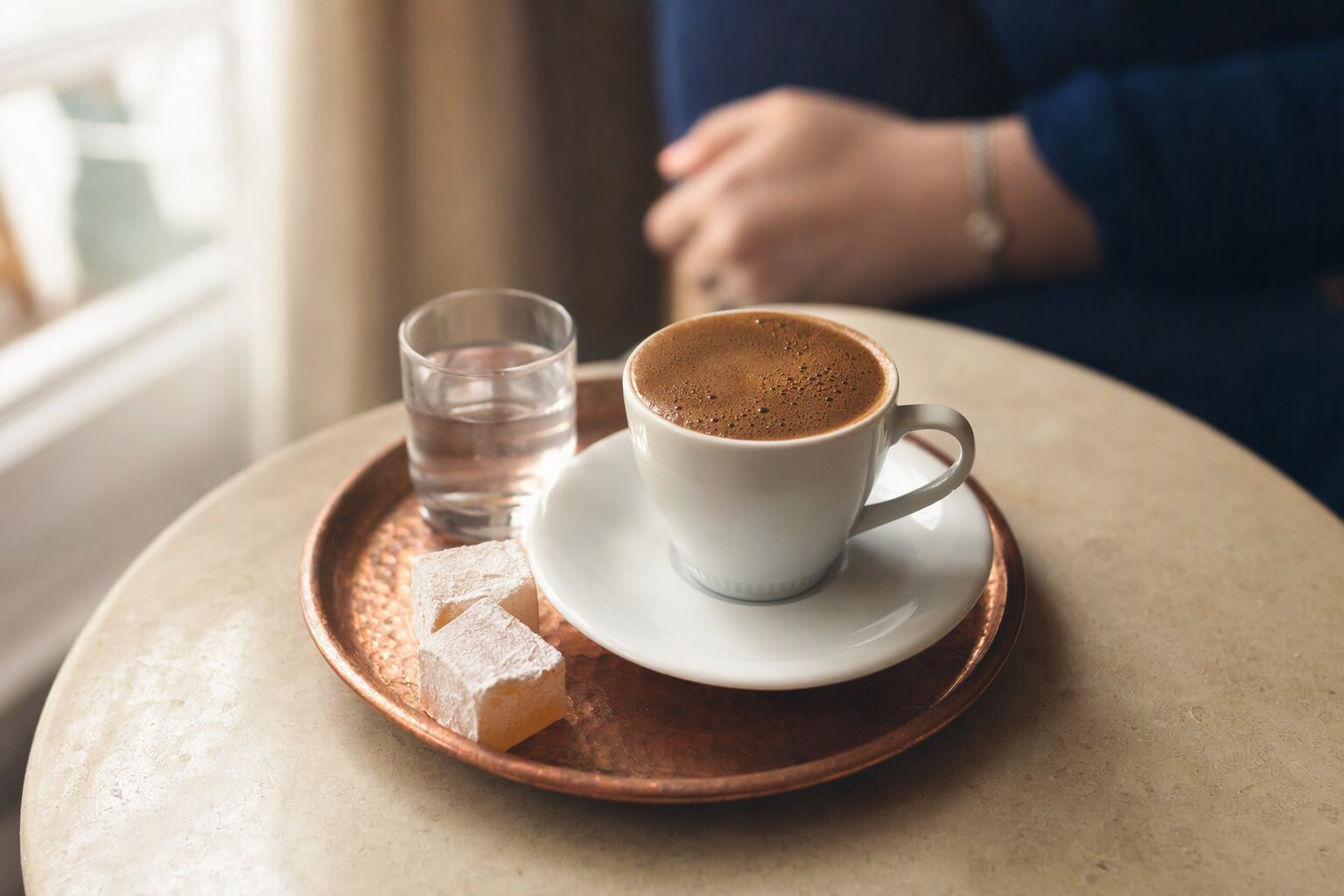
A good Turkish coffee machine warms the coffee slowly, as a cezve does, stops by itself when the foam rises, suits the number of cups you drink and is easy to clean. When you choose one, start with how many cups you brew, whether you want one pot or two and whether you want a water tank; then look at the pot material, the brewing settings, cleaning and safety. Below we go through these points and compare the popular models sold in Türkiye.
Roaster Lab does not sell Turkish coffee machines. We took the model details from the manufacturers' official product pages on 7 November 2026 and link to those pages; check them for current prices and stock.
How does a Turkish coffee machine work?
The pot sits on a heating base. As the coffee warms and the foam starts to rise, the machine's brew sensor detects it (on many models it sits behind a small window); the machine stops heating and gives a sound or light signal, so the coffee neither boils nor spills. According to the manufacturers' manuals, one cup takes about 1–1.5 minutes and a full pot 2–5 minutes. Some premium models heat by induction and draw water from a tank by themselves.
Seven things to check
1. Capacity: how many cups?
Single-pot machines usually brew 4 or 5 cups; double-pot models total between 6 and 10. If you mostly drink one or two cups, a small machine is enough; for a busy household or frequent guests, look at 5 cups or more. Every pot has a maximum line; don't go past it.
2. One pot or two?
Double-pot machines brew two pots at once or separately. They suit homes and offices where one person drinks it plain and another sweet, since a pot brews only one level of sweetness. Single-pot machines are smaller and usually cheaper.
3. Water tank or water in the pot?
On most machines you measure the water with a cup and pour it into the pot, which is closest to using a cezve. On models with a tank (such as the Arçelik TKM 9961 and Grundig TCM 7061) you choose the number of cups and the cup size, and the machine draws the water itself. A tank makes back-to-back brewing easier but is one more part to clean; the manufacturer recommends washing it at least every three months.
4. The pot material
Machine pots are either stainless steel or plastic with a steel base. Models with stainless steel pots include the Korkmaz Kahvekolik, Fakir Kaave Steel, Arçelik TKM 9961 and Grundig TCM 7061; the Karaca Hatır pots are plastic with a steel base. “Bakır” (copper) in a product name usually refers to the pot's colour, not its material. Whichever you choose, the manufacturers say to wash the pot by hand, not in the dishwasher.
5. Brewing and foam settings
Many brands offer a slow programme that imitates the low flame of a cezve: Arzum calls it “ağır ateşte”, while Philips, Karaca, Emsan and Tefal call it “közde”. Some models add several programmes, a cup-size choice or a milk programme. Whatever the name, the real difference is how slowly the coffee warms: slower heating builds a thicker foam.
6. Cleaning and limescale
The manuals say to wash the pot after every use, wipe the sensor window regularly (every 15–20 uses, according to Arçelik) and descale with vinegar or citric acid. One also warns that neglected scale can make the heating base unusable. If your water is hard, clean more often.
7. Safety, signals and service
Overflow prevention, automatic switch-off and a sound and light signal when the coffee is ready are standard on most machines today. Some models won't run at all if the pot is empty or not seated properly. Finally, check the brand's service network and whether spare pots are available: the pot is the part that wears most.
Popular models (November 2026)
These are machines that stood out in the Hepsiburada and Amazon bestseller lists in November 2026 and appear in the brands' current ranges. The order is not a recommendation; choose with the points above.
| Model (official page) | Cups | Pots | Water | Stands out for |
|---|---|---|---|---|
| Arzum Okka Minio (OK004) | 4 | Single | Into the pot | Slow (“ağır ateş”) brewing, brew sensor, sound and light alert |
| Arzum Okka Minio Duo (OK006) | 8 (2×4) | Double | Into the pot | Two pots: plain and sweet at the same time |
| Philips 5000 Serisi (HDA150) | 4 | Single | Into the pot | Standard and “közde” brewing, overflow and overheat sensors, auto-off |
| Arçelik TKM 9961 B Telve | 6 (2×3) | Double | 1.5 L water tank | Induction heating, cup-size choice, stainless steel pots, water-jet stirring |
| Grundig TCM 7061 Bio | 6 (2×3) | Double | Water tank | Induction heating, cup-size choice, stainless steel pots, low-water warning |
| Beko TKM 2341 Keyf-i Bol | 5 | Single | Into the pot | Overflow prevention, one-button use |
| Karaca Hatır Hüp Düet Aroma | 10 (2×5) | Double | Into the pot | Three programmes, including “közde” and flavoured |
| Karaca Hatır Neo-S Sütlü | 5 | Single | Into the pot | Programmes for Turkish coffee with milk and hot chocolate, “közde” |
| Emsan Közde | 5 | Single | Into the pot | “Közde” brewing; formerly sold as Hatır Köz |
| Fakir Kaave Steel | 4 | Single | Into the pot, water-level window | Steel pot, light-based overflow sensor (Luminasense) |
| Tefal Köpüklüm | 4 | Single | Into the pot | Normal and “közde” brewing, smart sensor |
| Korkmaz Kahvekolik (A860) | 4 | Single | Into the pot | Stainless steel pot, low-heat brewing (Termo Balans) |
| Homend Pottoman 1830H | 5 | Single | Into the pot, water-level indicator | Stops when the coffee is ready, switches off when the pot is lifted |
| Arnica Köpüklü (IH32050) | 4 | Single | Into the pot | Switches off automatically when the coffee is done |
Which machine suits whom?
- One or two people, a small kitchen: a compact 4-cup, single-pot model, such as the Arzum Okka Minio, Philips 5000 Series, Fakir Kaave Steel, Tefal Köpüklüm or Korkmaz Kahvekolik.
- A busy household, frequent guests: a 5-cup model (Beko TKM 2341, Emsan Közde, Homend Pottoman) or a double-pot machine.
- Plain and sweet at the same time: a double-pot model: Arzum Okka Minio Duo, Karaca Hatır Hüp Düet, Arçelik TKM 9961, Grundig TCM 7061.
- No measuring water: the Arçelik TKM 9961 or Grundig TCM 7061, with a tank.
- Turkish coffee with milk: a model with a milk programme, such as the Karaca Hatır Neo-S Sütlü.
- A stainless steel pot: Korkmaz Kahvekolik, Fakir Kaave Steel, Arçelik TKM 9961, Grundig TCM 7061.
Automatic machine or electric cezve?
An electric cezve is a pot with its own heater instead of a stove. Unlike an automatic machine, it doesn't detect the rising foam and stop by itself: Sinbo's manual asks you to switch it off when the coffee starts to boil, and its thermostat and fuse only protect against overheating. Electric cezves are cheap and quick, but you have to stay with the coffee, much as with a cezve on the stove.
| Electric cezve (official page) | Capacity | Note |
|---|---|---|
| Sinbo SCM 2928 | 0.4 L (5 cups) | 1000 W; you switch it off when the coffee starts to boil |
| Korkmaz Smart (A365) | 4 cups | Cordless, 360° base, stainless steel, protection against running dry; no automatic stop is listed |
A machine or a cezve on the stove?
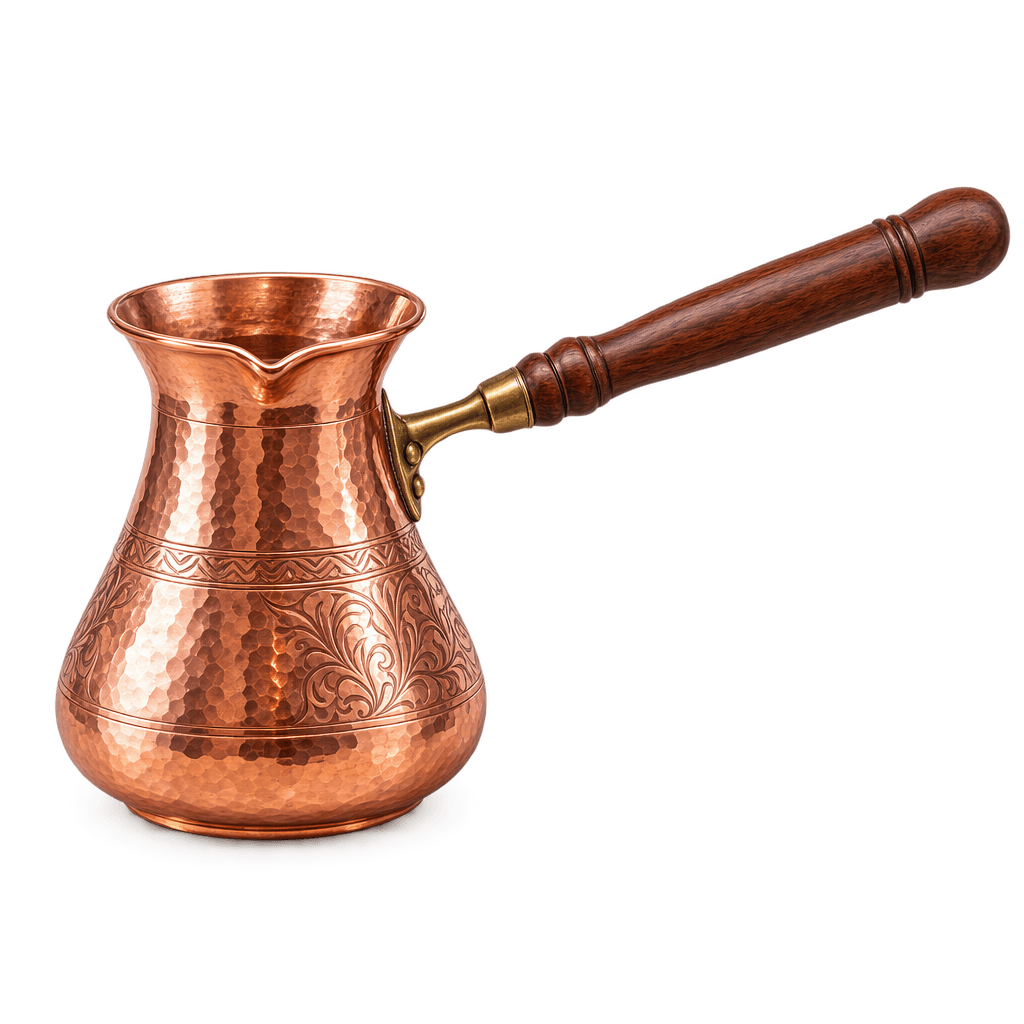
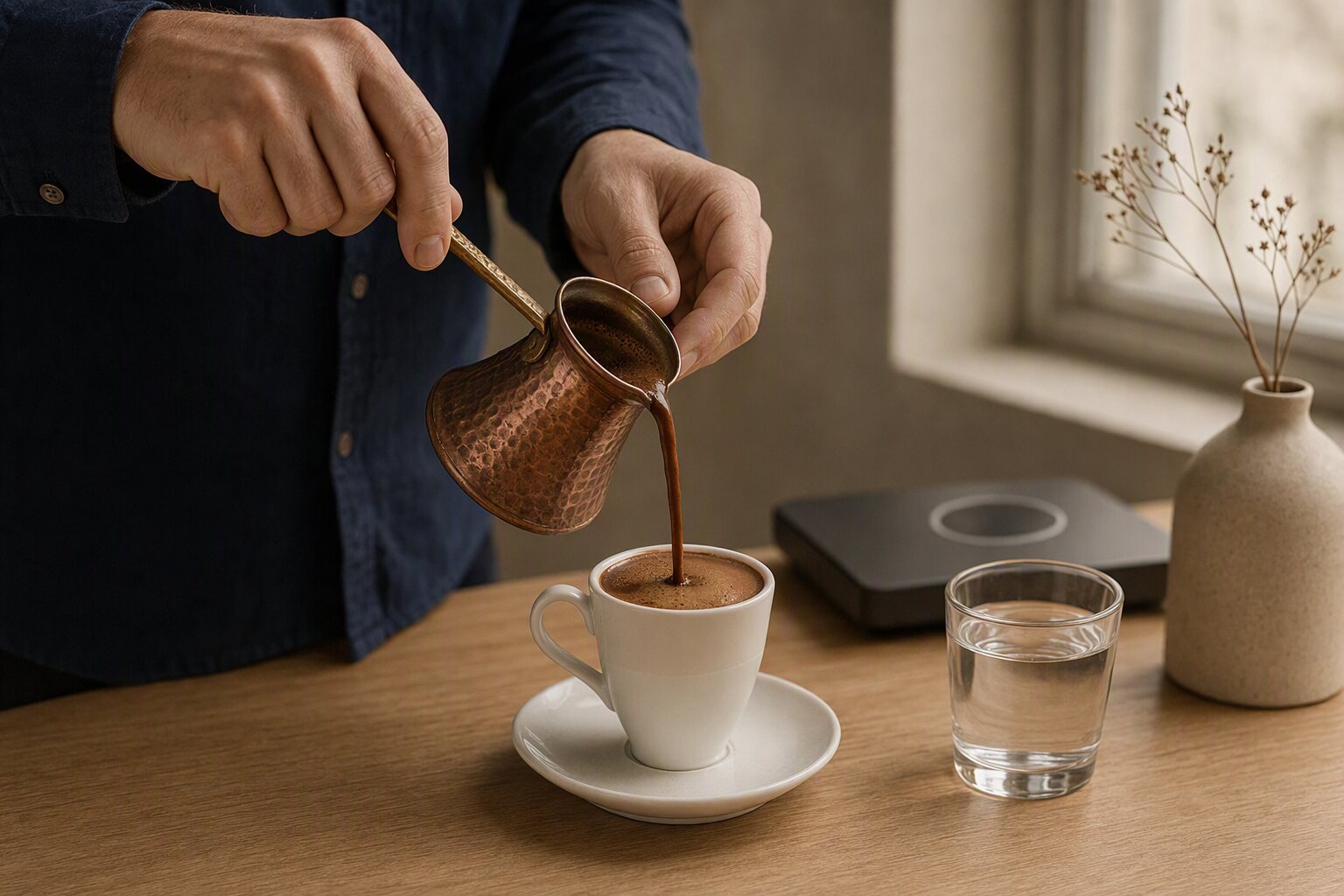
A machine is easy, never boils over and gives a similar cup every time; in return it needs power and counter space, and its pot wears with time. With a cezve on the stove you control the heat, so you can get the foam just right; a cezve is cheap and lasts for years. For the cezve method step by step, see How to make Turkish coffee; for choosing one, How to choose a copper cezve.
Six tips for better coffee from a machine
- Use fresh, flour-fine coffee. Machines use the same finely ground Turkish coffee as a cezve, and the manuals recommend it fresh and finely ground. Stale coffee won't foam in a machine either.
- Fill the machine's measuring spoon level. One level scoop per cup is enough; don't pack the coffee down.
- Add water as the manual says and stay under the maximum line. Fakir and Homend recommend cold water, Karaca fresh water at room temperature; follow your machine's manual.
- Follow the manual's order and leave no lumps. Brands differ on whether water or coffee goes in first; what matters is that the coffee mixes into the water without lumps. Arçelik recommends a wooden or plastic spoon rather than a metal one.
- Serve straight away. Pour the coffee as soon as the machine signals; the foam fades while it waits.
- Keep the pot and sensor window clean. Wash the pot after every use; a scaled base heats poorly, and a dirty sensor window stops the machine from reading the coffee properly.
If the machine won't heat or start
The causes the manuals list most often: the pot isn't seated properly (the machines won't start until it is), the pot is empty, or the water tank is empty or not fitted. If an error light is on, switch the machine off, wipe the base of the pot, the cooled heating plate and the sensor window, then start again. If you haven't descaled for a long time, descale first. If the problem persists, contact authorised service rather than opening the machine.
“A machine won't let your coffee boil over, but it can't make stale coffee fresh. The difference in the cup still comes from the coffee.”
— Roaster Lab
Coffee for your machine
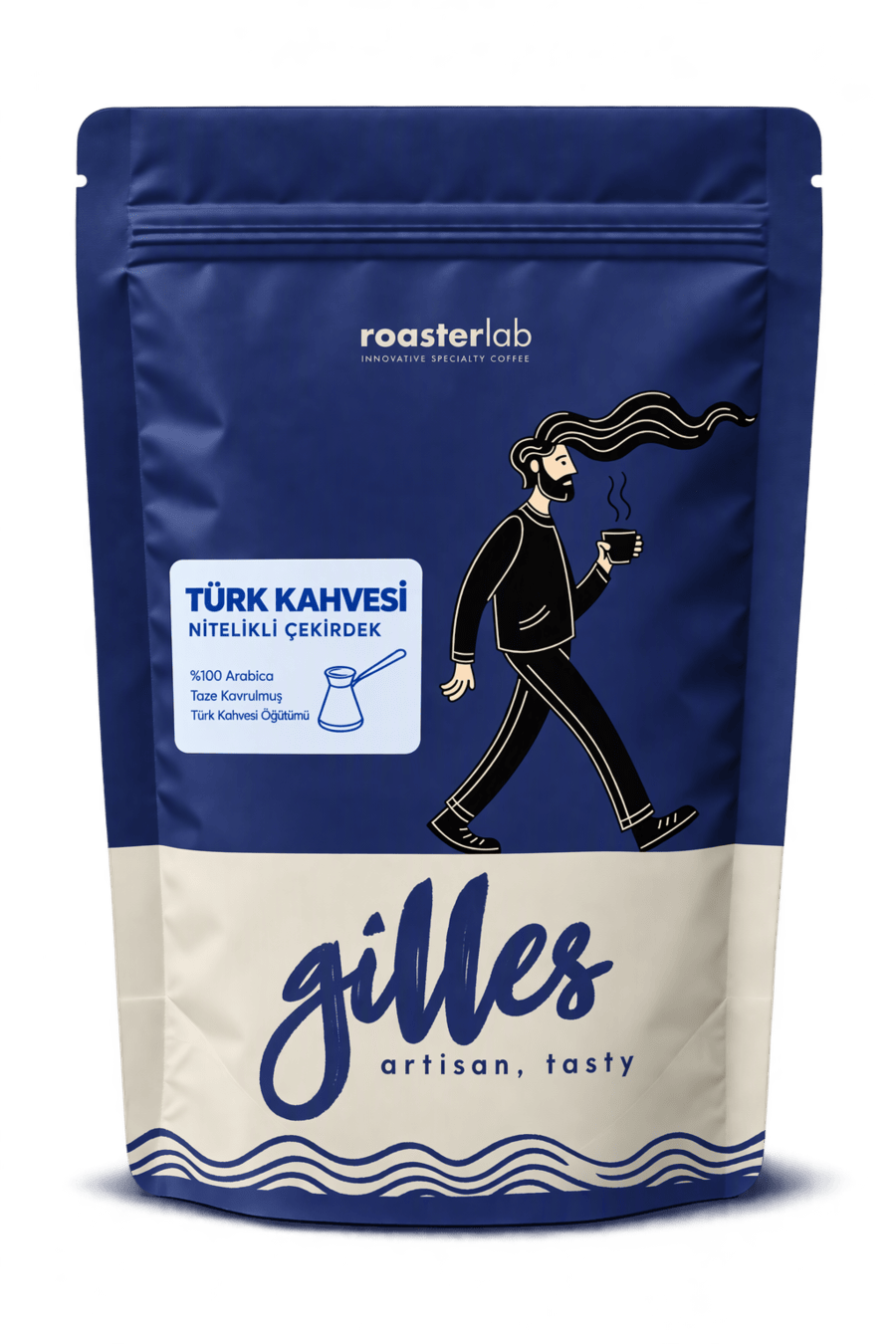
Turkish coffee machines need no special coffee; they use the same flour-fine Turkish coffee as a cezve. We make our Turkish coffee from Brazil Rio Minas beans and grind it to order, packing it straight away; the roast date is printed on every bag, and your order ships within 1–3 business days. See our Turkish coffee.