To make Turkish coffee, stir one cup (about 70 ml) of cold water and 7 g of Turkish coffee, a heaped teaspoon, per cup in a cezve; if you take sugar, add it now. Put the cezve on low heat and don't stir again. When the foam rises, share it between the cups; when the coffee rises a second time, take it off the heat before it boils over and pour. On low heat, one or two cups take 3–4 minutes.
Turkish coffee (2 cups)
Ingredients
- 140 ml cold drinking water (2 cups)
- 14 g freshly ground Turkish coffee (2 heaped teaspoons)
- Sugar to taste: 1 teaspoon for a little sweet, 2 for medium, 4 for sweet
Method
- Measure the water. Measure two cups of cold water into the cezve with the cups you will drink from.
- Add the coffee and sugar. Add two heaped teaspoons of Turkish coffee and any sugar to the water.
- Stir once. Stir until the coffee is mixed into the water with no lumps; do not stir again once it is on the heat.
- Heat it slowly. Put the cezve on low heat. Within a few minutes a dark, dense foam gathers on the surface.
- Share the foam. When the foam starts to rise, spoon it evenly into the two cups and put the cezve back on the heat.
- Pour before it boils. When the coffee rises again, take it off the heat before it boils and pour it slowly down the side of the cups. Let it rest a minute and serve with water.
Measures: how much coffee for how many cups?
The basic measure is 70 ml of water and 7 g of coffee per cup, roughly 1 to 10. A heaped teaspoon of finely ground Turkish coffee weighs about 7 g. Spoons differ from kitchen to kitchen, so if you have a scale, weigh the coffee once and calibrate your own spoon.
| Cups | Cold water | Turkish coffee |
|---|---|---|
| 1 | 70 ml | 7 g · 1 heaped teaspoon |
| 2 | 140 ml | 14 g · 2 heaped teaspoons |
| 3 | 210 ml | 21 g · 3 heaped teaspoons |
| 4 | 280 ml | 28 g · 4 heaped teaspoons |
Always measure the water with the cup you will drink from. If your cups are bigger than the classic size, increase the coffee in the same proportion. For a stronger cup, add a little more coffee rather than less water.
Sugar: sade, az şekerli, orta, şekerli
In Turkish coffee the sugar goes into the cezve with the coffee, right at the start. Sugar added later spoils the foam, and stirring in the cup lifts the grounds. Per cup:
| Preference | Sugar per cup |
|---|---|
| Plain (sade) | None |
| A little sweet (az şekerli) | Half a teaspoon |
| Medium (orta) | One teaspoon |
| Sweet (şekerli) | Two teaspoons |
One cezve brews one level of sweetness. If some want it plain and others medium, brew them separately.
The secrets of a thick foam
Foam is the signature of Turkish coffee. As the coffee warms slowly, its gases and oils form small, dense bubbles on the surface. To build and keep them:
- Use fresh coffee. The carbon dioxide left in roasted coffee feeds the foam, and it escapes quickly once the coffee is ground. Use ground coffee within two weeks. More in How long does Turkish coffee stay fresh?
- Grind it like flour. Turkish coffee is the finest grind of all. Coarser coffee won't hold a foam, and its grounds won't settle. See Grind size: the biggest variable in your cup.
- Cold water, low heat. The slower the coffee warms, the thicker the foam. Starting with hot water or turning up the heat thins it.
- Don't stir on the stove. The only stir comes before the heat; after that it breaks up the rising foam.
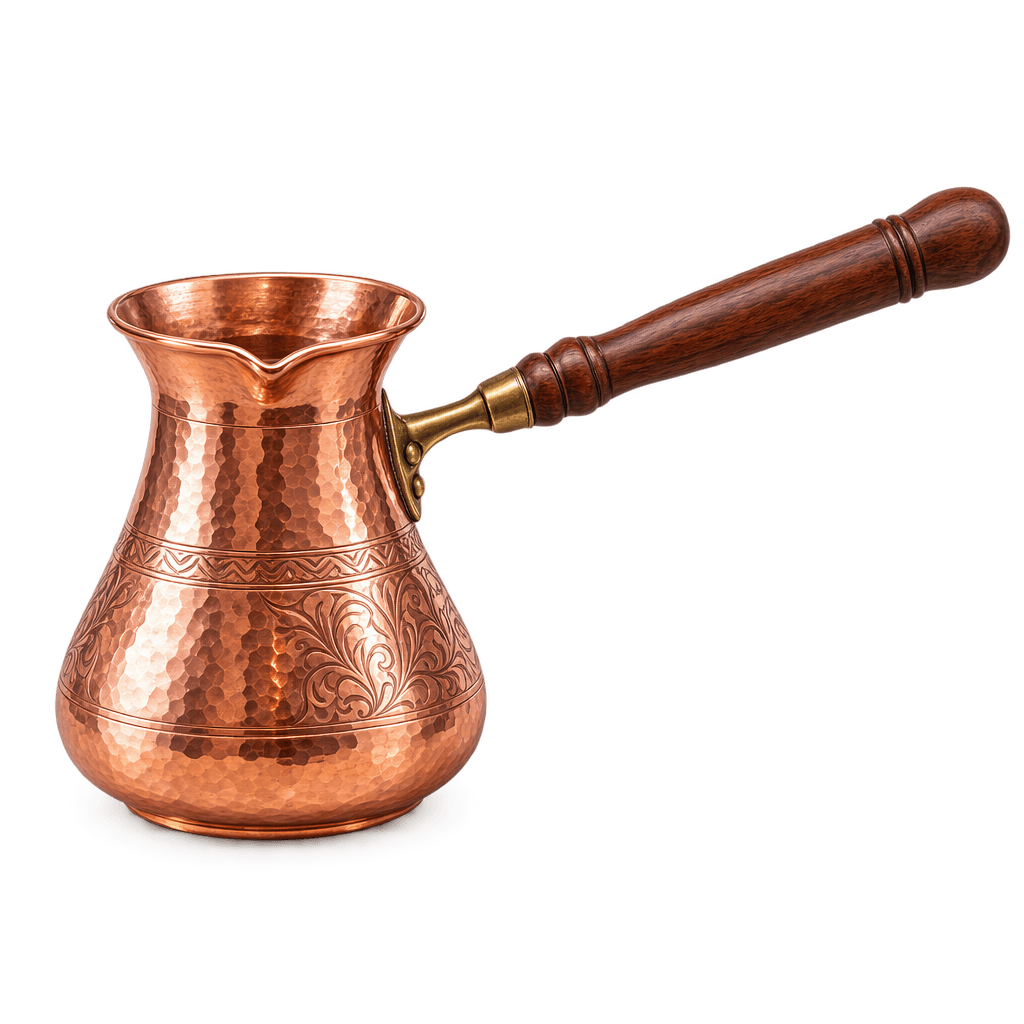
- A cezve sized to your cups. A small cezve with a narrow neck keeps the foam together; brew one cup in a big cezve and the foam spreads thin. More in How to choose a copper cezve.
- Foam first, coffee second. Spoon the foam into the cups, then pour the coffee slowly down the side so the foam stays on top.
Still little foam? We go through the causes one by one in Why won't my Turkish coffee foam?
Water or coffee first?
We suggest measuring the water into the cezve first, then adding the coffee and sugar: the water is measured accurately and the coffee sits on top. More important than the order is stirring the coffee into the water thoroughly, once, before the cezve goes on the heat, so no lumps remain.
How long does Turkish coffee take?
On low heat, one or two cups take 3–4 minutes; three or four cups a little longer. Don't turn up the heat to save time: the foam needs the coffee to warm slowly. On a gas hob, keep the flame small enough that it doesn't reach past the base of the cezve.
Six common mistakes
- Boiling the coffee. The foam collapses and the taste turns bitter. Take it off the heat when it rises.
- Starting with hot water. The coffee heats too fast and the foam has no time to form.
- Stirring on the stove. It breaks up the foam.
- Measuring by eye. Too little coffee gives a thin, foamless cup; too much, a muddy one.
- Using stale or open coffee. A pack left open takes on moisture and smells, and foams less.
- Adding sugar later. Stirring in the cup lifts the grounds.
Turkish coffee in a machine
Turkish coffee machines automate the cezve: they warm the coffee slowly and stop by themselves when the foam rises. The measures stay the same: a cup of cold water per cup, one measure of coffee and any sugar, all at the start. Rinse the machine's pot after use and descale it as often as the manual says. We compare the machines in How to choose a Turkish coffee machine.
Turkish coffee with milk
Use cold milk instead of water, or half milk and half water; the coffee and sugar stay the same. Milk rises faster than water and can catch on the bottom, so keep the heat at its lowest and stay by the cezve. The result is a softer, sweeter-tasting cup.
Turkish coffee on sand
On a traditional sand stove the cezve sits buried in hot sand, which heats it from the sides as well as the base. The coffee warms very evenly and slowly, so the foam is thick. At home, the closest you can get is the lowest flame and patience.
Serving: water, lokum and one minute
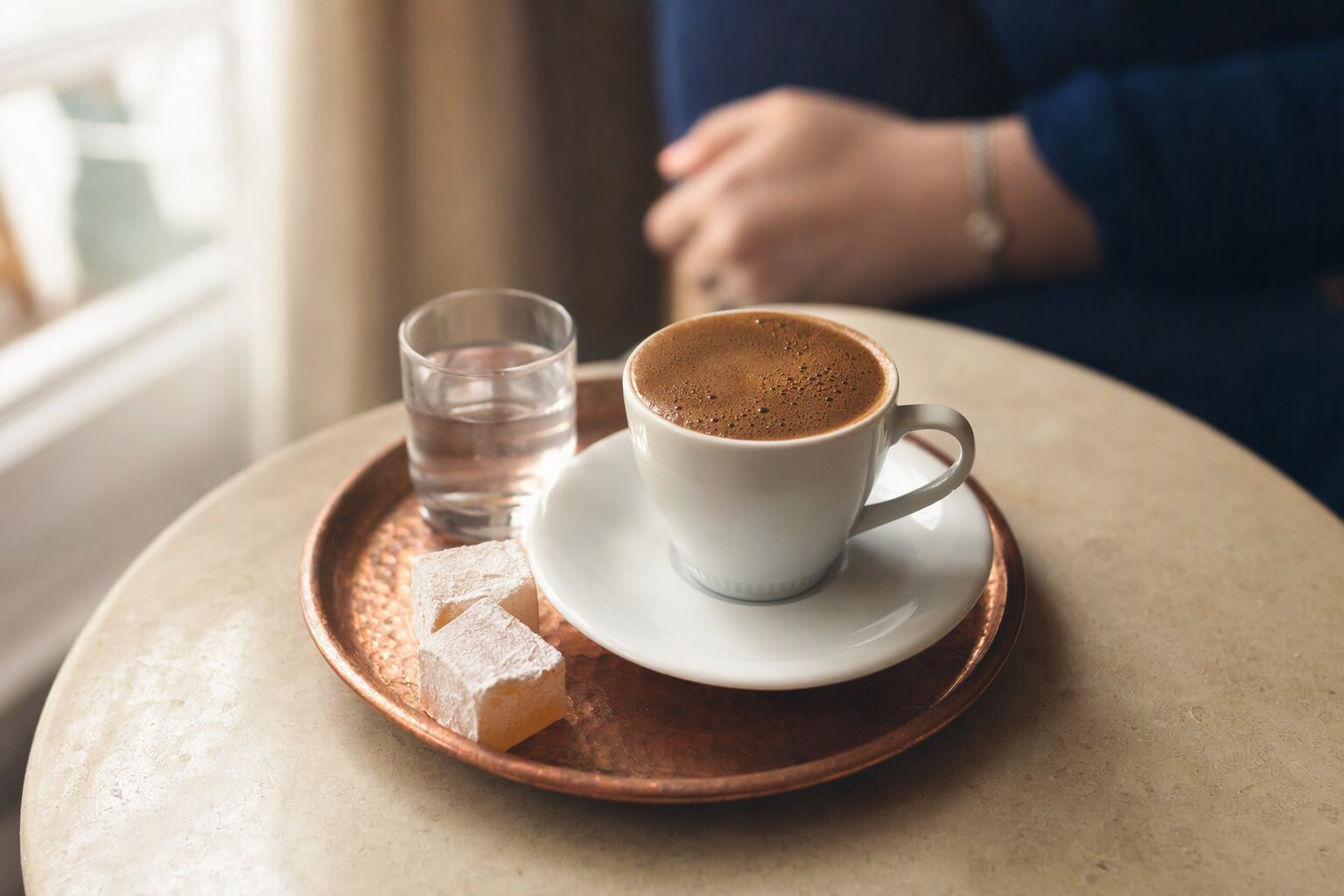
After pouring, wait a minute for the grounds to settle. Serve a glass of water alongside: a sip first clears the palate, so you taste the coffee better. Turkish delight (lokum) or a piece of dark chocolate are the traditional companions. Don't drink the grounds at the bottom of the cup.
How to store Turkish coffee
Keep ground coffee in its resealed bag or an airtight container in a cool, dark cupboard. Not in the fridge: coffee takes on moisture and smells. Turkish coffee tastes best within two weeks of grinding, so buy a little and often.
“There's no great secret to good Turkish coffee: fresh coffee, cold water, low heat and a little patience.”
— Roaster Lab
Our Turkish coffee
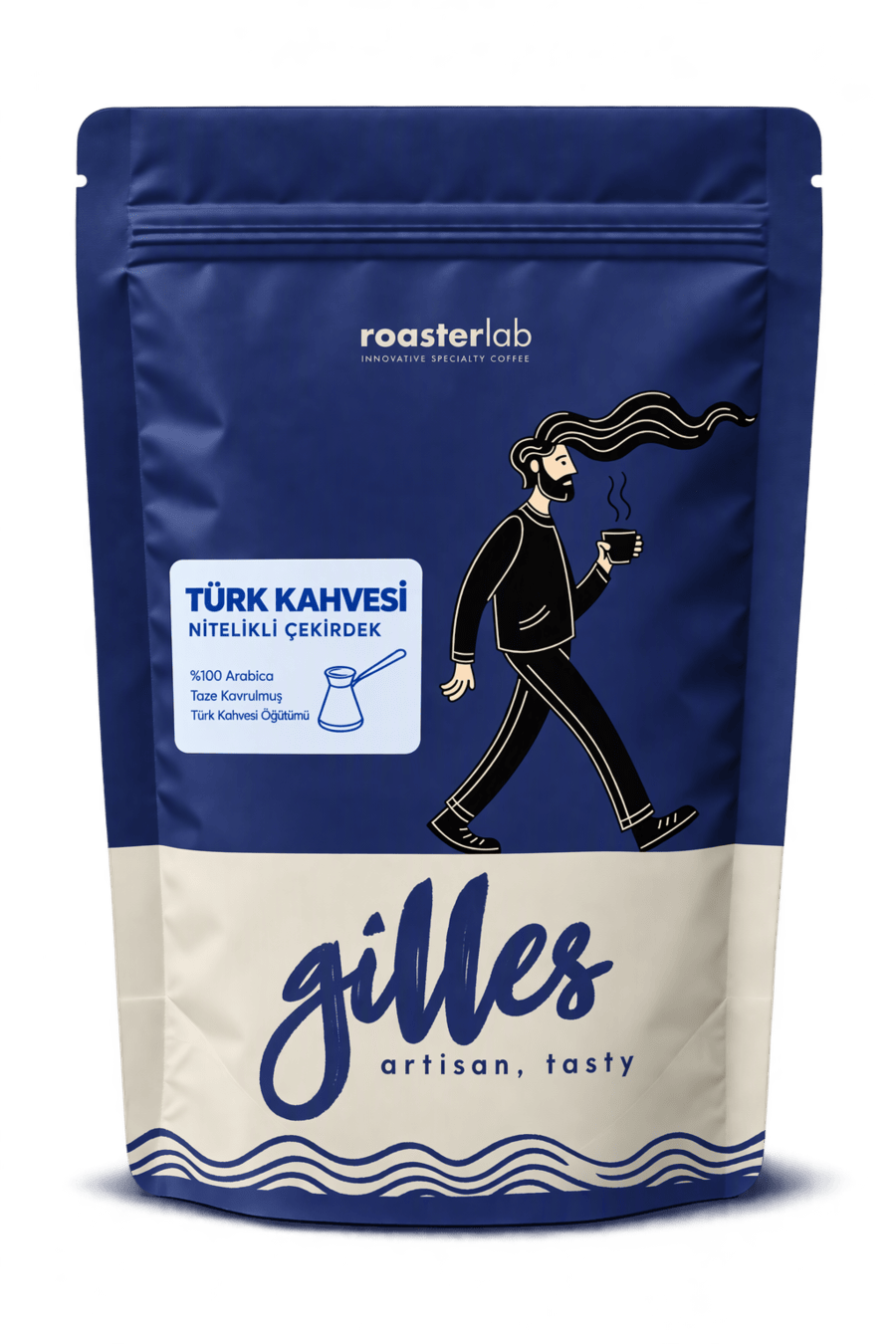
We make our Turkish coffee from Brazil Rio Minas beans, 100% Arabica. We roast it medium for the cezve, grind it like flour to order and pack it straight away; the roast date is printed on every bag. A 250 g bag makes about 35 cups and ships within 1–3 business days. If you'd rather grind it yourself, we also send it as whole beans.
See our Turkish coffee, and if you don't have a cezve yet, our handmade copper cezve.