One of the questions we hear most often is: "Why doesn't the Colombia I bought last month taste the same as this month's?" The answer is simple but a little long. Coffee is an agricultural product, like grapes or olives. It ripens on the tree, is picked by hand, dried, travels for months and has an age by the time it reaches us. We want to walk through that calendar here, because once you understand it, the changes on our shelf start to read as a rhythm rather than a flaw.
Every origin has its own season
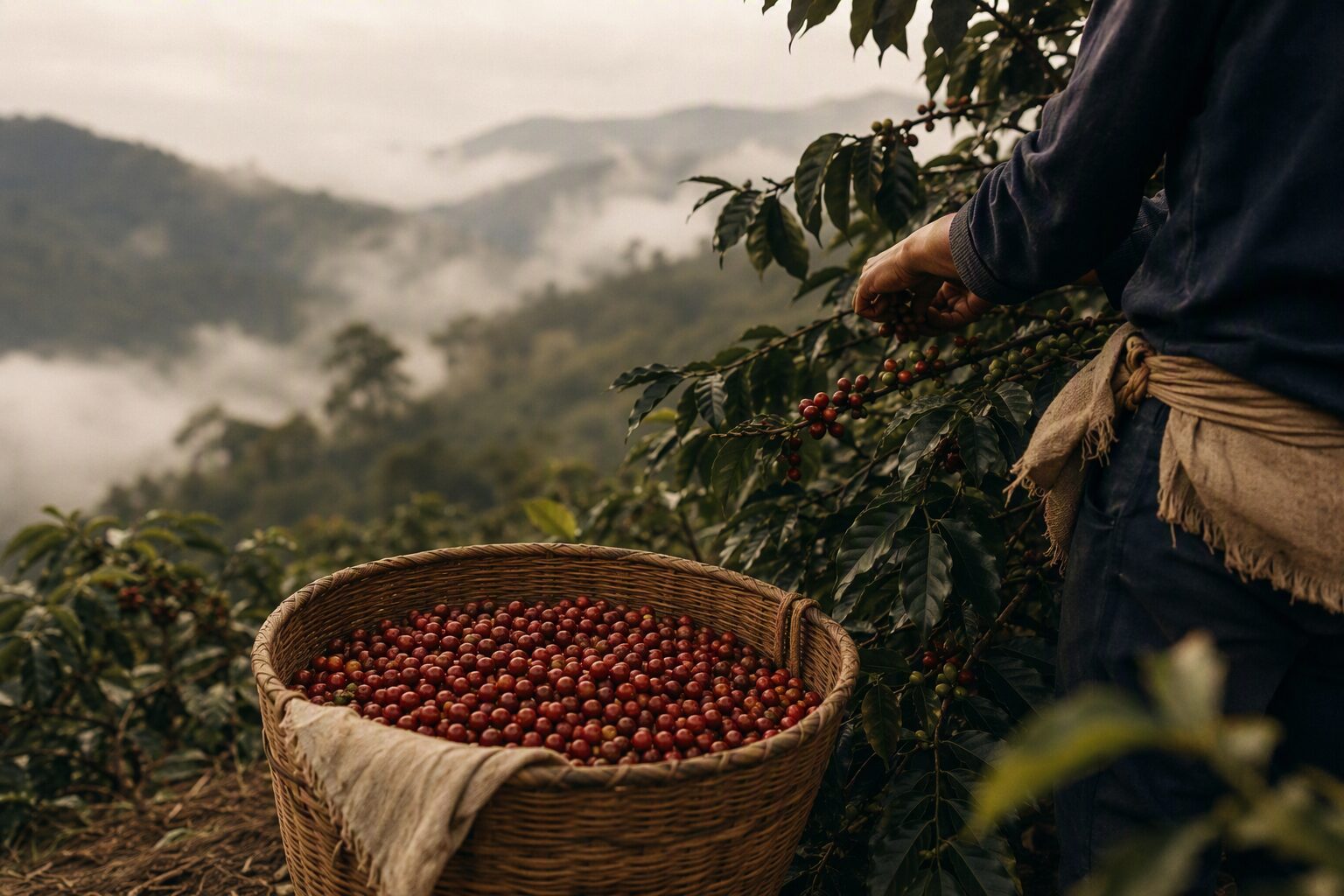
Coffee grows along the equatorial belt, but that belt is not one climate. In Ethiopia the main harvest runs from October to January. New crop from Yirgacheffe is processed, dried and shipped, and usually lands in Turkey between April and June. Colombia has two seasons: in southern regions like Huila the main harvest is October to December, with a second, smaller "mitaca" harvest picked between April and June. This is why fresh Colombian coffee can be found almost year round. In Brazil the harvest stretches from May to September; the dry winter in Cerrado is ideal for natural processing. In Guatemala, the Antigua region picks from December to March.
These dates are not set in stone. One year the rains arrive late, flowering shifts and the harvest moves three weeks. That shows up in the coffee too: same producer, same plot, a slightly different cup.
Green coffee has a lifespan
Unroasted coffee keeps for a long time when stored properly, but "keeps" and "at its best" are not the same thing. Fresh-crop coffee is lively, with clear acidity and distinct aromatics. As the months pass that clarity slowly softens, and at some point flat notes of paper and straw begin to take over. We try to finish a coffee before it gets there. That is why some coffees sit on the shelf for a while and then give way to the new season.
Rather than keeping one origin available all year, we prefer to rotate with the seasons. Sometimes that means a coffee you love is gone for a few months. In return, the coffee you do buy is genuinely in its best window.
What we change in the roastery
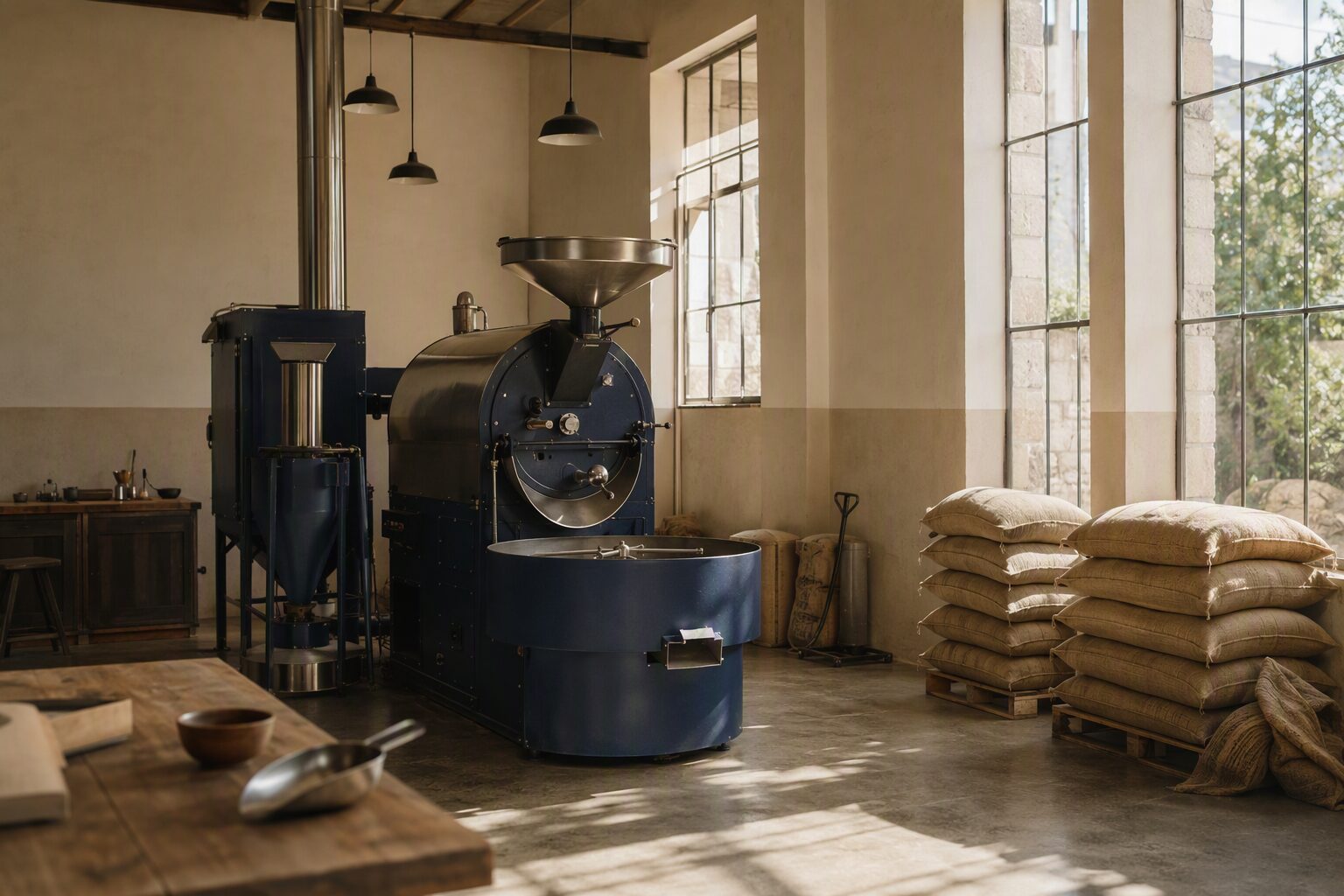
The first thing we do when a new lot arrives is roast it on the previous lot's profile and taste them side by side. When moisture and density differ, the same profile does not give the same cup. A few test roasts usually get us to a profile that suits the new crop: sometimes a few degrees on the charge temperature, sometimes a longer development phase. The aim is not to make the coffee "taste like the old lot" but to find the new lot's own best version.
What this means for you
The harvest year on the bag is there for a reason. If you loved a coffee and it disappeared from the shelf, its season has most likely ended; it will be back next season with a slightly different character. Subscribers already notice this: the same coffee does not come out of the box every month, because the same coffee is not in the field every month.
The rough calendar below shows when you will find each origin freshest. Dates are approximate and drift a little each year.
- Ethiopia — harvest October–January, arrives with us April–June
- Colombia — main harvest October–December, mitaca April–June, fresh lots year round
- Brazil — harvest May–September, arrives September–November
- Guatemala — harvest December–March, arrives May–July
In the next post we will talk about the changes in the roastery. You can always reach us with questions; telling the story behind a cup is our favourite part of the job.