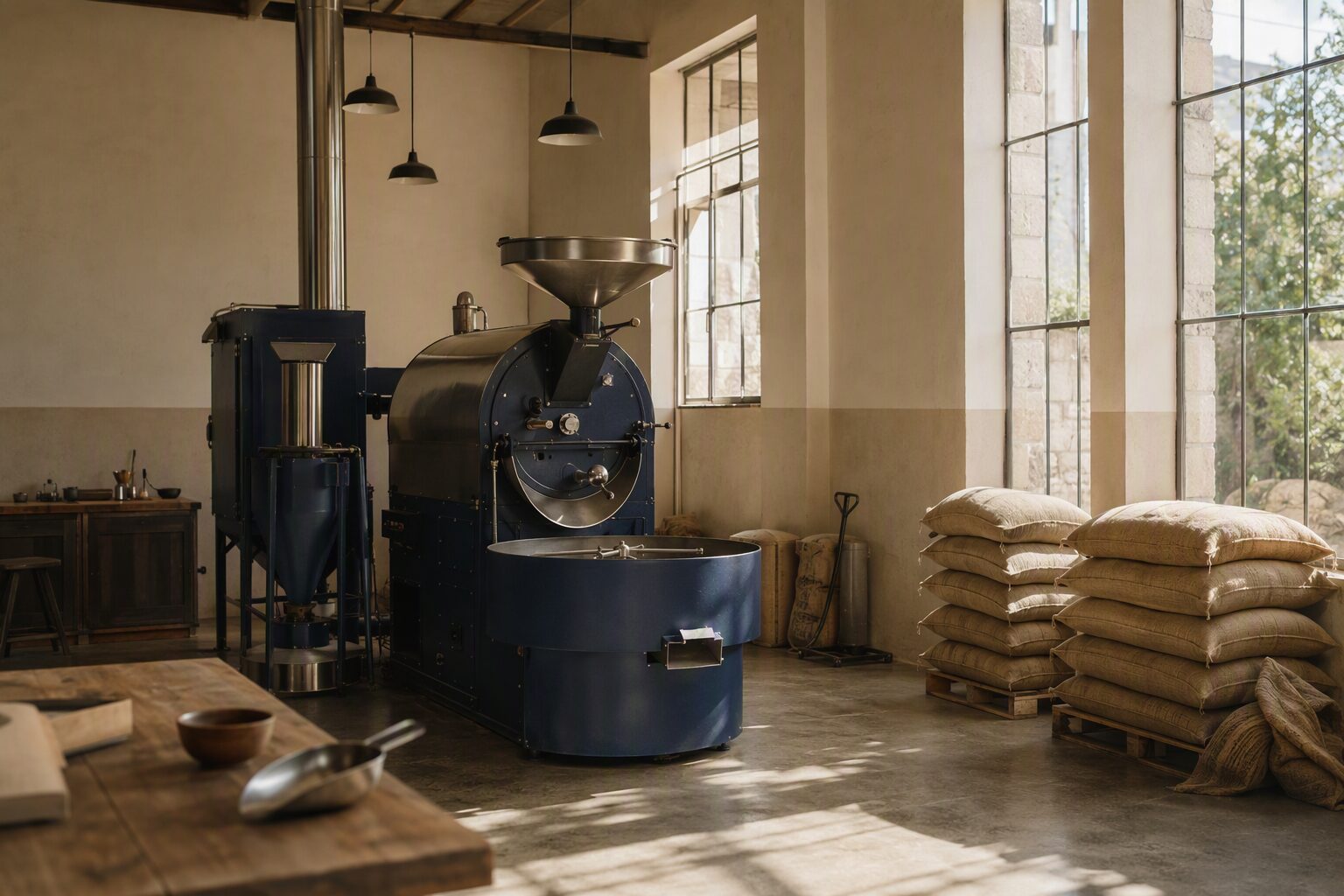
In early June we carried out the last sack and closed the door on the old roastery. The new place is still in Ankara; higher ceilings, better ventilation and, importantly, enough room for a cupping table next to the roaster. In this post we want to explain why we moved, what we scaled up and what we deliberately did not.
Why we moved
Our old roaster was a small drum and it served us well for a long time. But over the last year, as our wholesale partners grew in number, roast days started stretching from morning to evening. Roasting the same coffee six or seven times a day means small drifts in every batch. We wanted to roast the same coffee in fewer, better-controlled batches. That called for a larger drum and a space it could work in comfortably.
The second reason was ventilation. Smoke and chaff from roasting become a problem for staff and neighbours alike in a small space. In the new roastery the flue line and the chaff collector were planned from day one.
Getting to know the new roaster
Changing roasters is less like changing cars and more like changing kitchens. You relearn how the stove heats up and which corner of the oven runs hot. For the first three weeks we roasted nothing for sale. We tried every coffee on its old profile, then rebuilt each one around the new drum's thermal behaviour.
The biggest difference was thermal mass. The bigger drum heats up more slowly but holds heat longer, so the gas settings from the old profiles did not translate directly. First crack came later and development stretched out. We lowered the charge temperature, ran higher gas in the opening minutes and then stepped it down gradually. The new profiles land close to the old cup but a little cleaner and sweeter; in the Yirgacheffe especially, the fruit reads more clearly.
What we did not change
Batch size. The new drum holds several times what the old one did, but we do not fill it. There are two reasons for small batches: control and freshness. Working at around half the drum's capacity lets us manage heat more precisely. And roasting two or three times a week instead of once means the coffee on the shelf is always from the last few days. Check the roast date on the bottom of the bag and you will see it.
We did not change the tasting routine either. The morning after every roast day, all batches go on the table blind. A batch we do not like does not go on sale; it goes to the café or to the training room.
What is in the new space
Right next to the roasting floor, behind a glass partition, is a cupping and training room. Our brewing courses now run here, and people on the course can watch the roasting through the glass. At the front there is a small bar where we try the day's roasts as filter and espresso, and so can you.
And a green coffee store. In the old roastery the sacks sat next to the roaster, and the summer heat did them no favours. The new store is cool and dark; the advice on the back of our box, "a cool, dry place away from light", is something we apply to ourselves first.
Come and see
The roastery is open to visitors during weekday roasting hours. Walk in, have a coffee, watch the roast, ask your questions. We are preparing a separate introduction programme for wholesale partners; a message through the contact page is all it takes.
Moving was exhausting, but when the first batch came out of the new roaster the whole team said the same thing: we are going to like it here.